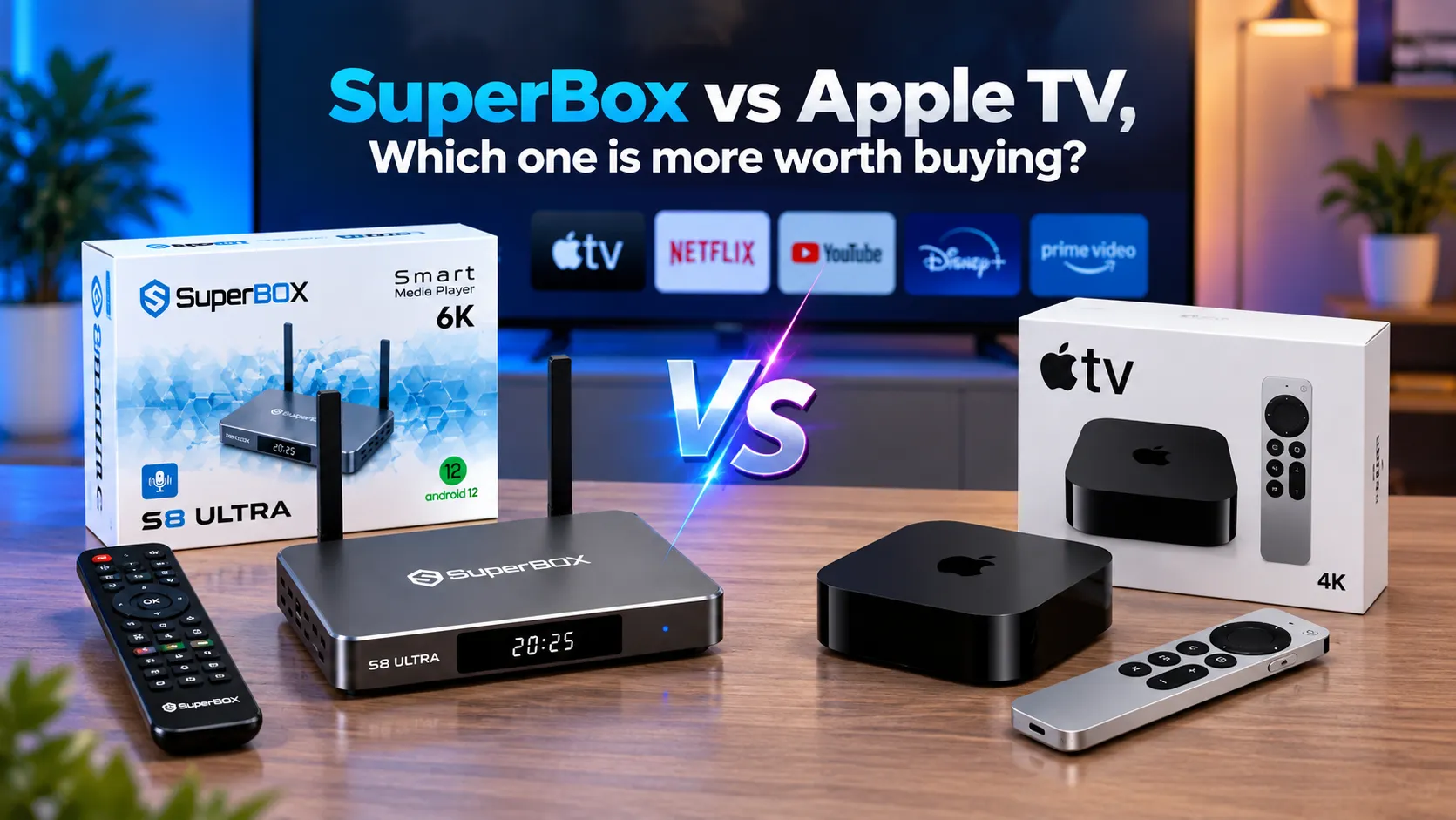
SuperBox and Apple TV represent two fundamentally opposing approaches to living room television streaming. While Apple TV 4K operates as a premium commercial media client designed for subscription streaming apps and Apple ecosystem integration, SuperBox functions as a turnkey cord-cutting console delivering thousands of live broadcast channels, pay-per-view events, and seven-day playback without recurring monthly fees.
Quick Takeaways & Key Highlights
- SuperBox provides an integrated live television streaming suite with 2,200+ channels and 7-day Playback requiring zero monthly fees.
- Apple TV 4K operates as a playback client requiring paid subscriptions like YouTube TV or Sling TV to stream live television channels.
- Hardware engineering contrasts Apple’s proprietary A15 Bionic silicon against SuperBox’s multi-core 64-bit AV1/HEVC media processors.
- SuperBox models (S6, S7, S8) feature up to 4GB RAM, 128GB storage, Gigabit Ethernet, and passive aluminum heatsink cooling.
- Apple TV 4K enforces a closed tvOS walled garden prohibiting sideloading, while SuperBox provides full open Android APK freedom.
- Both platforms operate as fully legal consumer electronics hardware certified under official FCC and CE electronic regulatory standards.
What Are the Fundamental Differences Between SuperBox and Apple TV?
SuperBox and Apple TV 4K address home entertainment from completely different engineering perspectives. Evaluating both systems requires understanding whether you want a closed ecosystem for commercial apps or a dedicated appliance that eliminates cable bills.
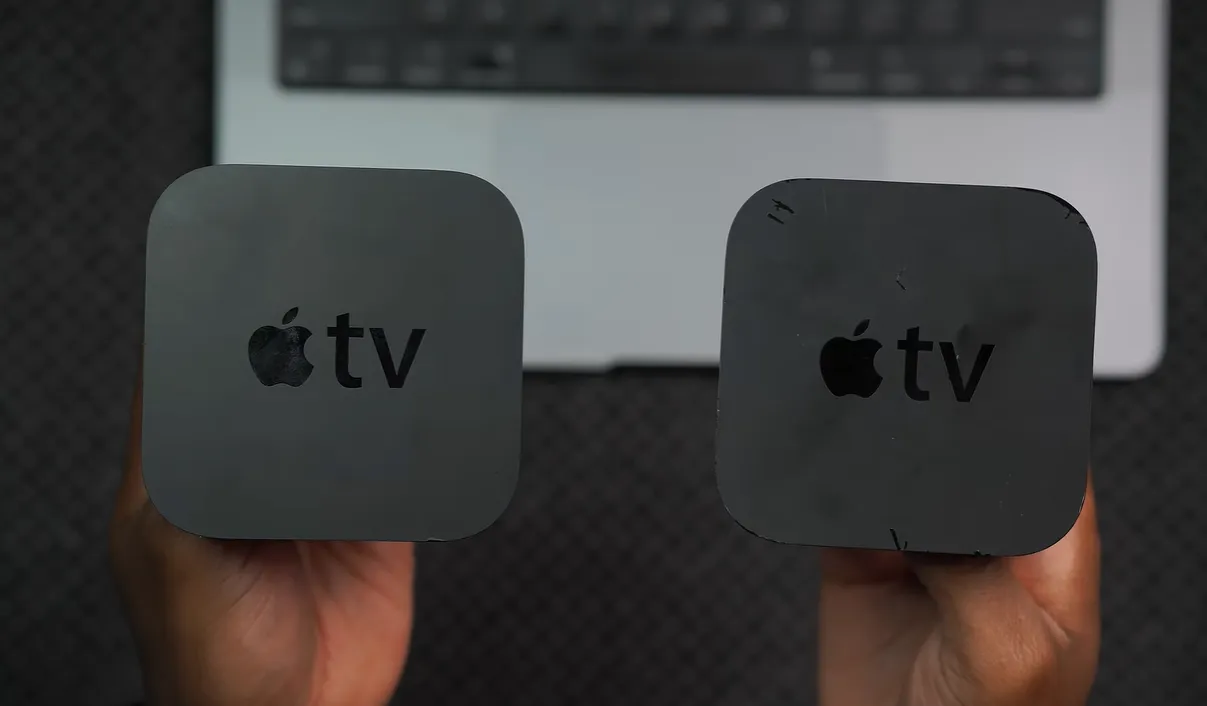
Apple TV 4K is built as an extension of Apple’s premium consumer hardware ecosystem. Apple engineered the console to deliver ad-free navigation, seamless AirPlay casting from iOS devices, and calibrated playback for commercial streaming platforms such as Netflix, Apple TV+, and Disney+.
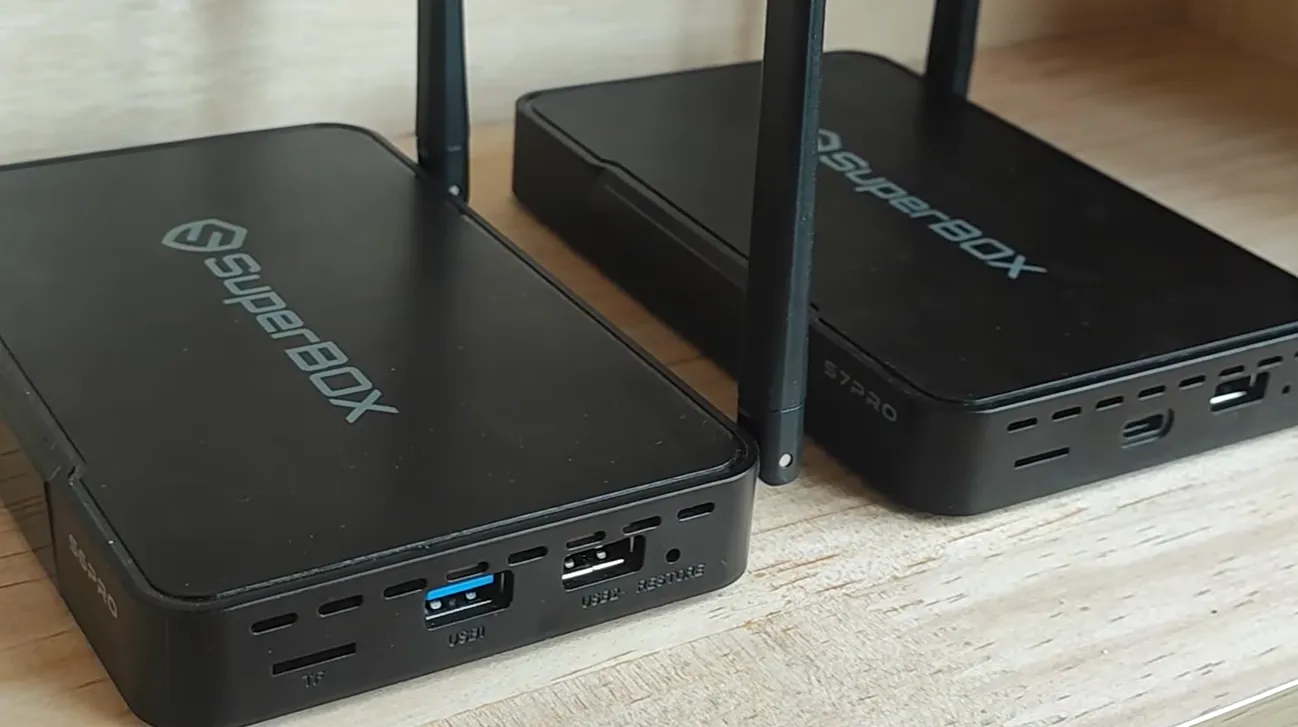
SuperBox hardware models (spanning the S6, S7, and S8 tiers) are built specifically for cord-cutters. SuperBox focuses on providing immediate, subscription-free access to live cable broadcasts, regional sports networks, and pay-per-view events directly upon initial connection.
The operational divide between these two streaming platforms centers on four primary distinctions:
- Content Distribution Architecture: SuperBox integrates turnkey live television networks, whereas Apple TV requires users to maintain separate paid streaming accounts.
- Operating System Governance: Apple TV runs closed tvOS software that prohibits APK sideloading, while SuperBox runs open Android supporting third-party media tools.
- Ecosystem Independence: SuperBox functions entirely standalone on any display, whereas Apple TV delivers maximum utility only when paired with iPhones or iPads.
- Long-Term Recurring Costs: SuperBox requires a single upfront hardware purchase, whereas Apple TV users typically incur recurring monthly live TV subscription fees.
Hardware Engineering and System Performance: Apple Silicon vs Open Media Architecture?
Processor horsepower and internal component design define how efficiently these media consoles decode high-bitrate video streams. Both devices feature impressive physical engineering, but prioritize different operational workloads.
Apple TV 4K houses Apple’s A15 Bionic processor, featuring a 5-core GPU and 4GB of unified RAM. This mobile-derived silicon delivers immense computing power, allowing tvOS menus to glide effortlessly and rendering complex Apple Arcade 3D video games with console-like fluid motion.
SuperBox hardware utilizes specialized 64-bit quad-core processors engineered specifically for real-time video decoding. Depending on the model tier, SuperBox units integrate between 2GB and 4GB of DDR4 memory alongside expandable 16GB, 32GB, 64GB, or 128GB eMMC flash storage configurations.
Thermal management and port connectivity highlight several vital differences:
- Chassis Thermal Design: SuperBox S7 and S8 models utilize an all-metal anodized aluminum casing acting as a passive heatsink, operating silently at approximately 38.5 degrees Celsius during continuous 4K streaming.
- Enclosed Plastic Construction: Apple TV 4K uses an enclosed molded plastic shell that relies on internal conduction, running warmer under extended video decoding workloads.
- Wired Ethernet Data Rates: SuperBox S7 and S8 tiers provide an RJ45 Gigabit Ethernet port supporting 1000Mbps speeds, matching the 1000Mbps Ethernet port on the higher-tier Apple TV 4K model.
- Wireless Reception Capabilities: SuperBox consoles feature dual external high-gain antennas supporting Wi-Fi 6, ensuring superior wall penetration compared to internal antennas on Apple TV.
Content Distribution: Turnkey Live TV vs Paid Subscription Ecosystem?
The decisive contrast between SuperBox and Apple TV 4K lies in content licensing, ongoing costs, and everyday television access.
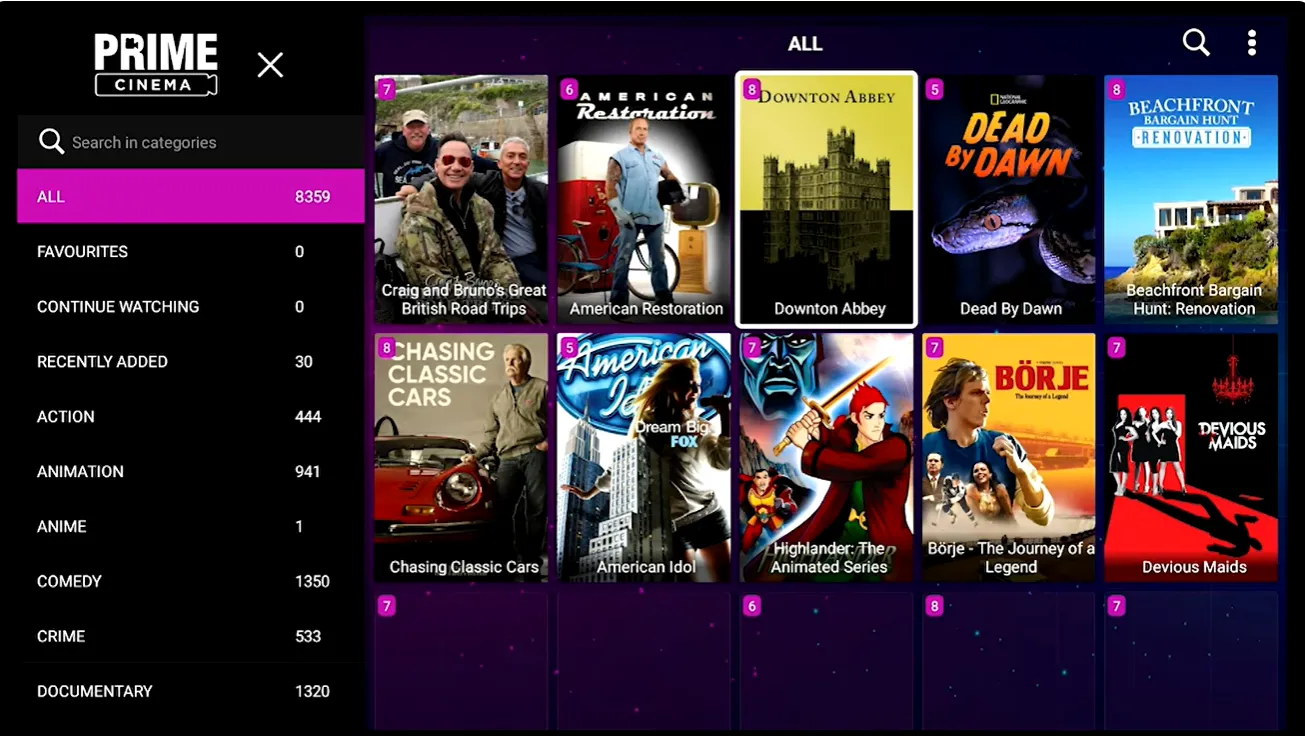
SuperBox integrates the proprietary Blue application suite, comprising Blue TV, Blue VOD, and SuperBox Playback. Blue TV delivers more than 2,200 live television channels, including national network broadcasts, regional sports packages, premium movie networks, and live pay-per-view events without recurring subscription charges.
SuperBox Playback automatically archives 7 full days (168 rolling hours) of programming across 86 core news and sports networks. Viewers can scroll through past program guides, pause live television, and rewind missed sporting events without programming local DVR hardware.
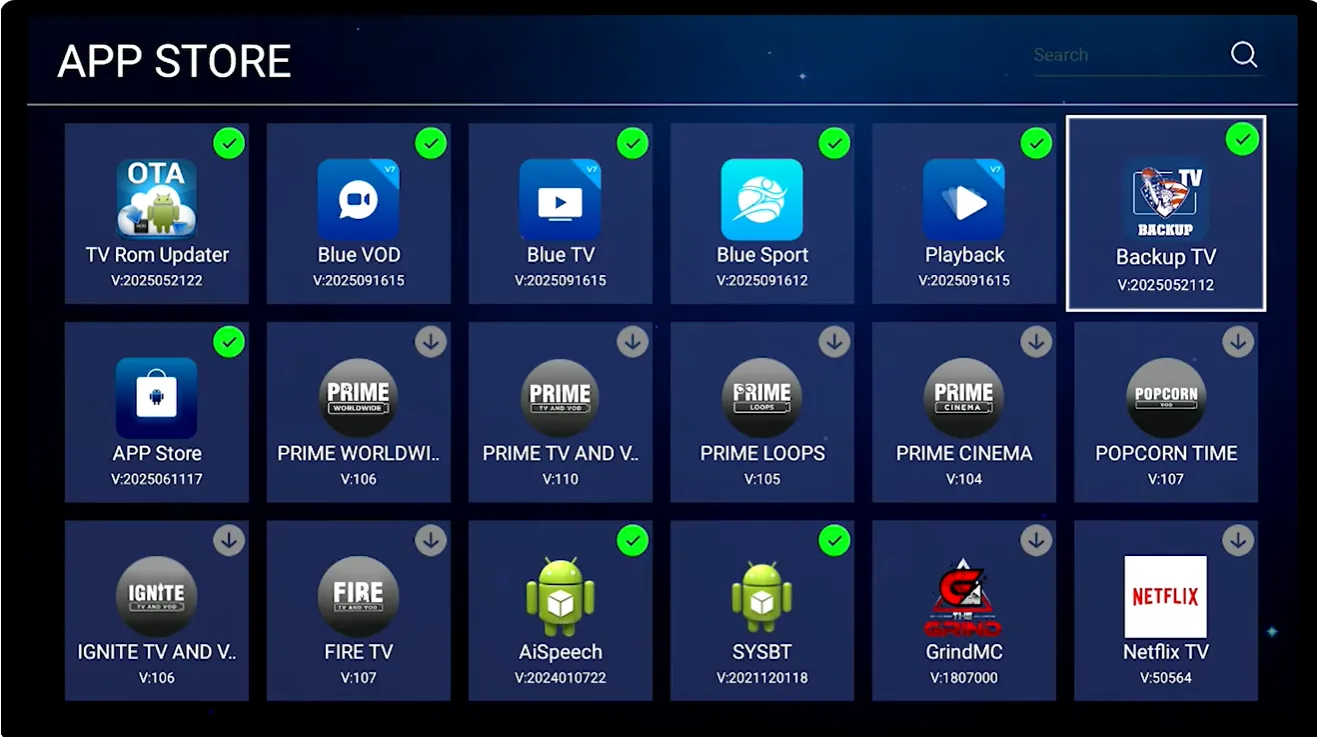
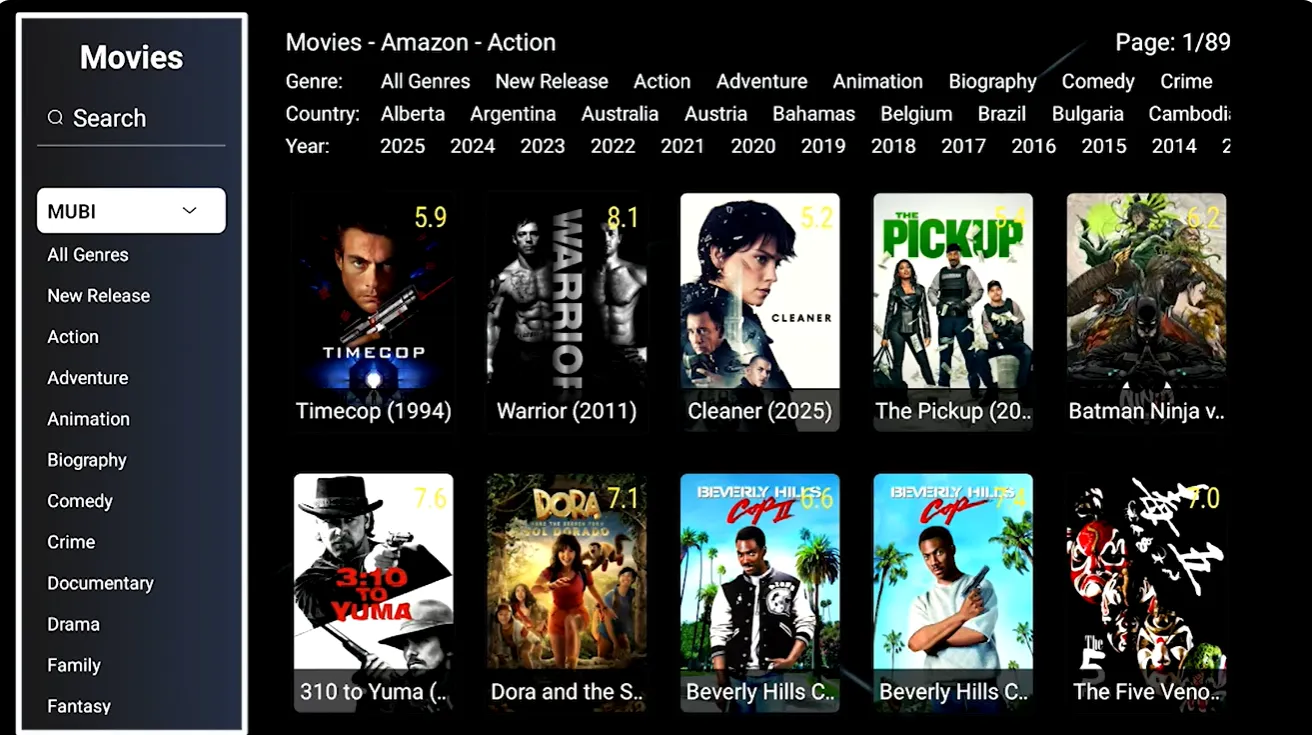
Apple TV 4K operates exclusively as a storefront and media client. To watch live broadcast channels or sporting events on Apple TV, users must subscribe to commercial television services such as YouTube TV, Hulu + Live TV, Sling TV, or FuboTV.
Monthly subscription fees for these commercial streaming services range between $40 and $85 every month, adding over $900 annually to entertainment expenses. Combined with paid apps like Netflix and Apple TV+, Apple TV ownership entails substantial ongoing financial commitments.
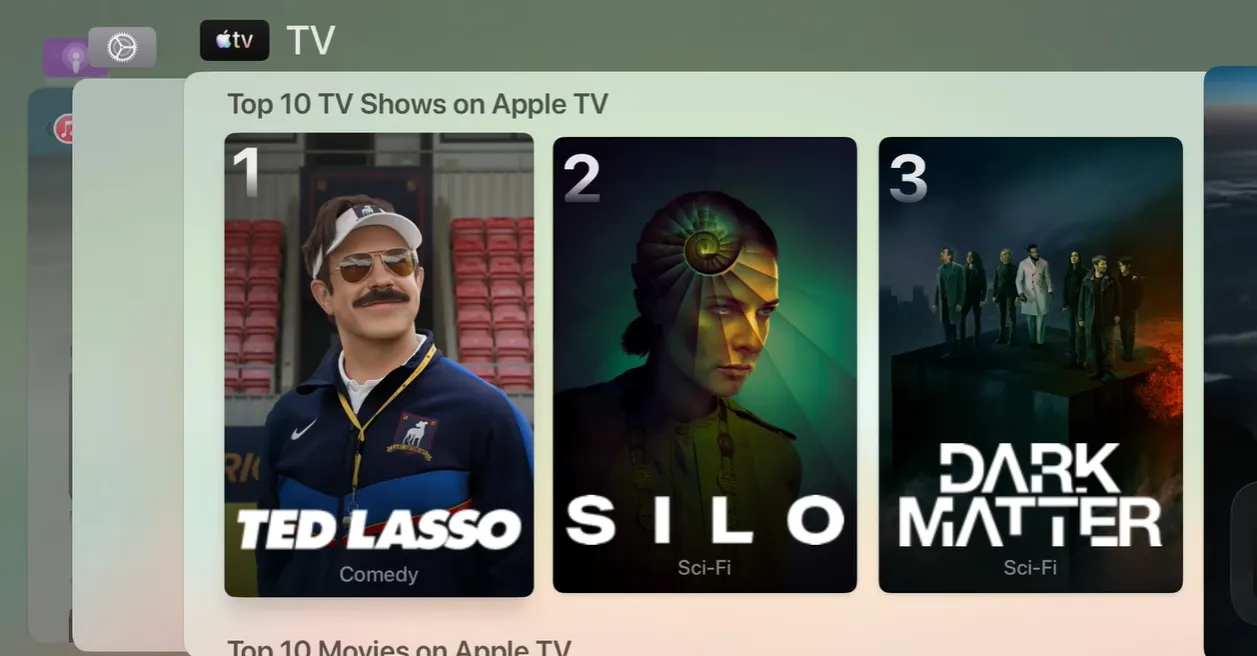
Furthermore, Apple’s strict tvOS App Store moderation blocks unapproved streaming tools and custom IPTV engines. In contrast, SuperBox operates on an open Android foundation, allowing users to install standard Android APKs and personalized media players freely.
Tech Reviewer Insights: What Do Video Creators Say About SuperBox vs Apple TV?
Independent technology reviewers have extensively benchmarked Apple TV 4K against alternative streaming platforms. Examining their empirical findings reveals clear guidance on platform strengths and practical trade-offs.
Home entertainment reviewer The Viewing Angle analyzed living room streaming dynamics in a comprehensive ecosystem breakdown:
The Viewing Angle emphasizes that while Apple TV 4K delivers a pristine, ad-free interface with rapid A15 Bionic performance, the device is tied strictly to paid commercial subscriptions. If you do not subscribe to costly services, the hardware provides zero live television programming.
Hardware analyst SpecXcel examined upcoming Apple TV hardware leaks, observing that packing high-end processors and 12GB of memory into streaming boxes is massive overkill if a user simply wants to watch live television and movies without paying endless monthly fees.
Technology channel Educational Hub evaluated the real-world cost of living room streaming, noting that while Apple hardware offers smooth software integration, consumers are increasingly seeking dedicated cord-cutting solutions that eliminate compounding monthly subscription bills.
Industry commentator ZST Leaks analyzed television hardware lifecycles, concluding that mainstream viewers care primarily about content availability and immediate live channel streaming, rather than paying premium prices for locked-down smart home processing chips.
Audio and Video Standards: Dolby Vision vs Open 4K Broadcasting?
Visual fidelity and audio support distinguish how these devices integrate with modern high-end home theater equipment.
Apple TV 4K excels in commercial digital mastering formats, offering native support for Dolby Vision, HDR10+, and Dolby Atmos audio output. Features like Quick Media Switching (QMS) eliminate black screen delays when matching frame rates, and iPhone color calibration optimizes display tones automatically.
SuperBox hardware delivers Ultra HD 4K video decoding at 60 frames per second with HDR10 dynamic color contrast across all live channels and on-demand movies. Channel switching latency averages a rapid 0.8 seconds across standard 50Mbps home broadband connections.
Prospective buyers must recognize an honest technical trade-off: SuperBox lacks official Netflix 4K DRM certification, restricting Netflix playback to standard definition. SuperBox is engineered specifically for cord-cutters watching live sports and cable broadcasts, rather than paid 4K DRM subscription apps.
Comprehensive Hardware and Feature Comparison Matrix?
Evaluating concrete hardware and software specifications provides a clear side-by-side comparison of both streaming devices:
| Streaming Hardware Platform | Primary Operating Focus | Processor Silicon & GPU | System RAM & Storage Tiers | Network Protocols & Ports | Live TV & Time-Shift Suite | Annual Total Cost of Ownership |
|---|---|---|---|---|---|---|
| SuperBox (Universal S6, S7, S8) | Turnkey cord-cutting and subscription-free live TV | 64-bit multi-core AV1/HEVC media processor | 2GB to 4GB DDR4 RAM / 16GB to 128GB eMMC storage | 1000Mbps Gigabit LAN, Wi-Fi 6 with external dual antennas, USB-C | Blue TV (2,200+ channels) and 7-day Playback (86 channels) | $0 per year (one-time hardware purchase, no monthly fees) |
| Apple TV 4K (3rd Generation) | Premium commercial app playback and Apple ecosystem hub | Apple A15 Bionic chip with 5-core GPU | 4GB unified RAM / 64GB or 128GB NVMe storage | 1000Mbps Gigabit LAN (Ethernet model only), Wi-Fi 6 internal array | Requires third-party paid subscriptions (YouTube TV, Sling, Fubo) | $960 to $1,440+ per year for live television service packages |
Which Streaming Device Fits Your Living Room Setup?
Selecting between SuperBox and Apple TV 4K depends directly on your household viewing habits, existing devices, and entertainment budget:
- Choose SuperBox If: Your primary priority is eliminating monthly cable television bills, watching live sports, news, and pay-per-view events without ongoing subscription fees, and enjoying an open Android system with turnkey live streaming.
- Choose Apple TV 4K If: Your home is deeply invested in the Apple ecosystem with iPhones and Apple Watches, you value Dolby Vision streaming on commercial apps like Netflix, and you are comfortable paying monthly fees for live TV services.
Frequently Asked Questions About SuperBox and Apple TV?
Can Apple TV Stream Free Live Cable Television Like SuperBox?
Apple TV 4K does not include free live cable television networks. To watch major broadcast channels, regional sports, or news networks on Apple TV, users must purchase and maintain a paid monthly subscription to a commercial provider like YouTube TV, Hulu + Live TV, or Sling TV.
Can You Sideload Third-Party Streaming Apps on Apple TV?
Apple TV 4K operates on a closed tvOS system that strictly prohibits sideloading standard Android APK files. In contrast, SuperBox runs an open Android architecture that allows users to install third-party applications and media utilities without system restrictions.
Does SuperBox Require Any Monthly Subscription Fees?
SuperBox requires zero monthly subscription fees, zero activation charges, and zero renewal contracts. Once you purchase the console, built-in access to live television channels, on-demand movies, and seven-day playback archives remains completely active without ongoing billing.
Which Device Offers Better Value for Long-Term Home Entertainment?
SuperBox offers superior financial value for households seeking to cut cable costs. While Apple TV requires spending upwards of $1,000 annually on television subscriptions, SuperBox recoups its initial hardware purchase price within four months and delivers free television entertainment thereafter.
Experience Unrivaled Streaming Performance with SuperBox
Discover lightning-fast quad-core processing, dual-band Wi-Fi 6, 7-day playback, and crisp 6K ultra HD output engineered for discerning media fans.