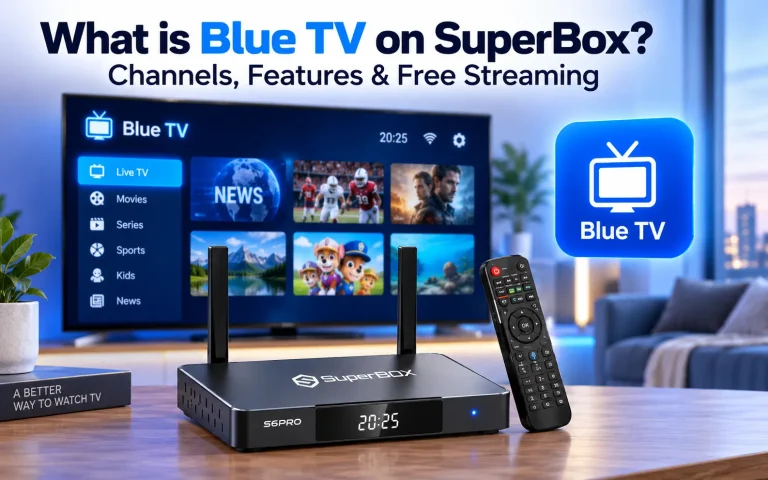
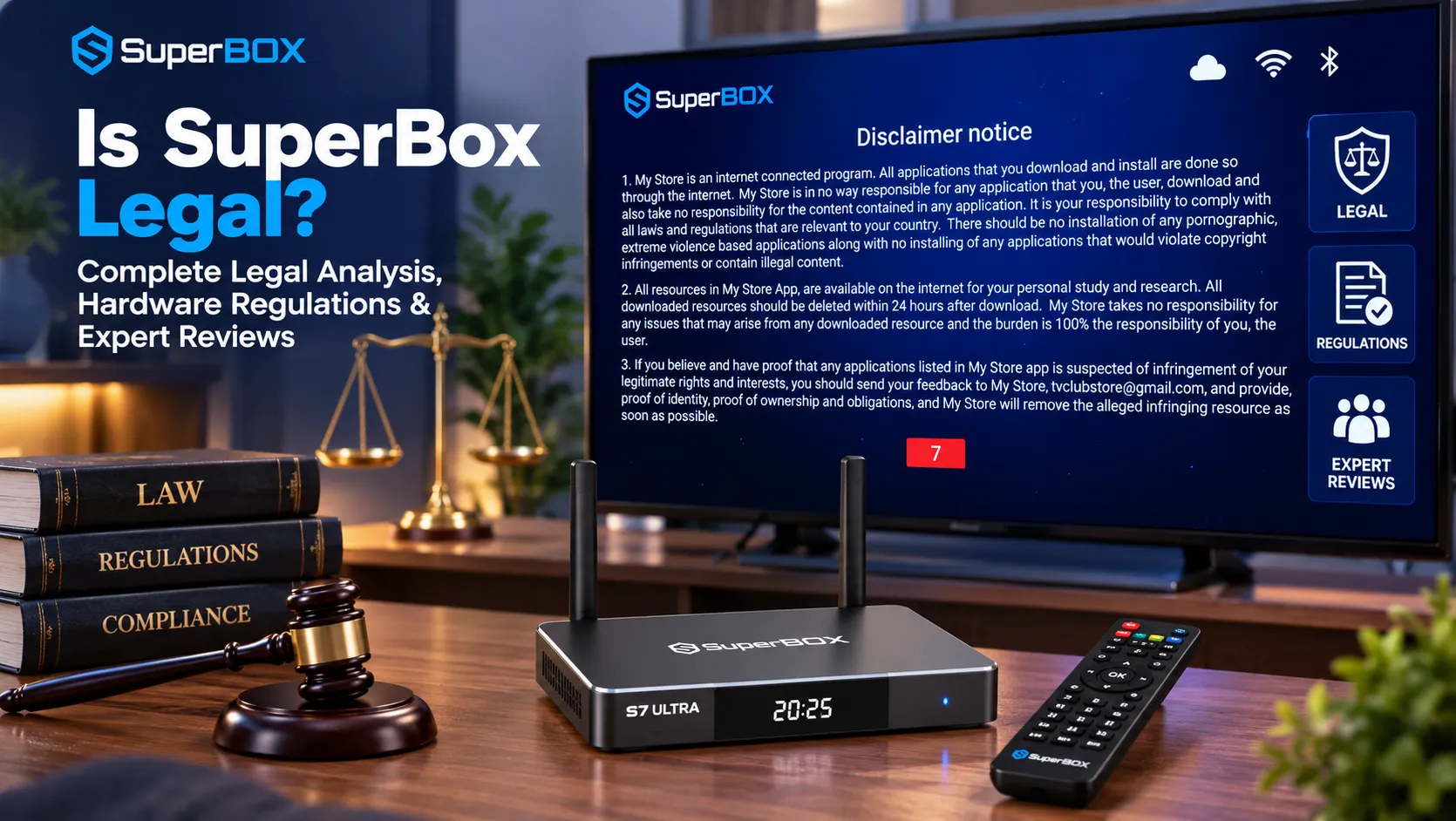
SuperBox is a legal consumer electronics media player running certified Android operating systems with standard FCC and CE regulatory compliance. Under United States copyright law, owning and operating an Android TV box is completely lawful because the hardware contains no preloaded copyrighted media files. End users streaming digital broadcasts for personal home entertainment do not violate federal copyright reproduction statutes.
Quick Takeaways & Key Highlights
- SuperBox is manufactured and sold legally as an Android-based consumer electronics hardware console.
- Hardware compliance meets official FCC Part 15 and CE certification standards for home radio frequency devices.
- Title 17 of the United States Code distinguishes between hardware ownership and unauthorized media distribution.
- Prominent technology reviewers verify that SuperBox arrives as clean hardware without pre-installed media files.
- End-user streaming for private home viewing does not constitute criminal copyright infringement under federal law.
- IPTV transmission is an industry-standard digital protocol utilized globally by major telecommunication providers.
What Is the Legal Status of SuperBox Hardware?
SuperBox is legally classified as an open Android media console and mini PC. The physical device is built from standard consumer electronics hardware components, including a 64-bit Quad-Core ARM Cortex-A53 processor, Mali-G31 graphics processor, DDR memory, flash storage, Wi-Fi 6 networking, and an HDMI video interface.
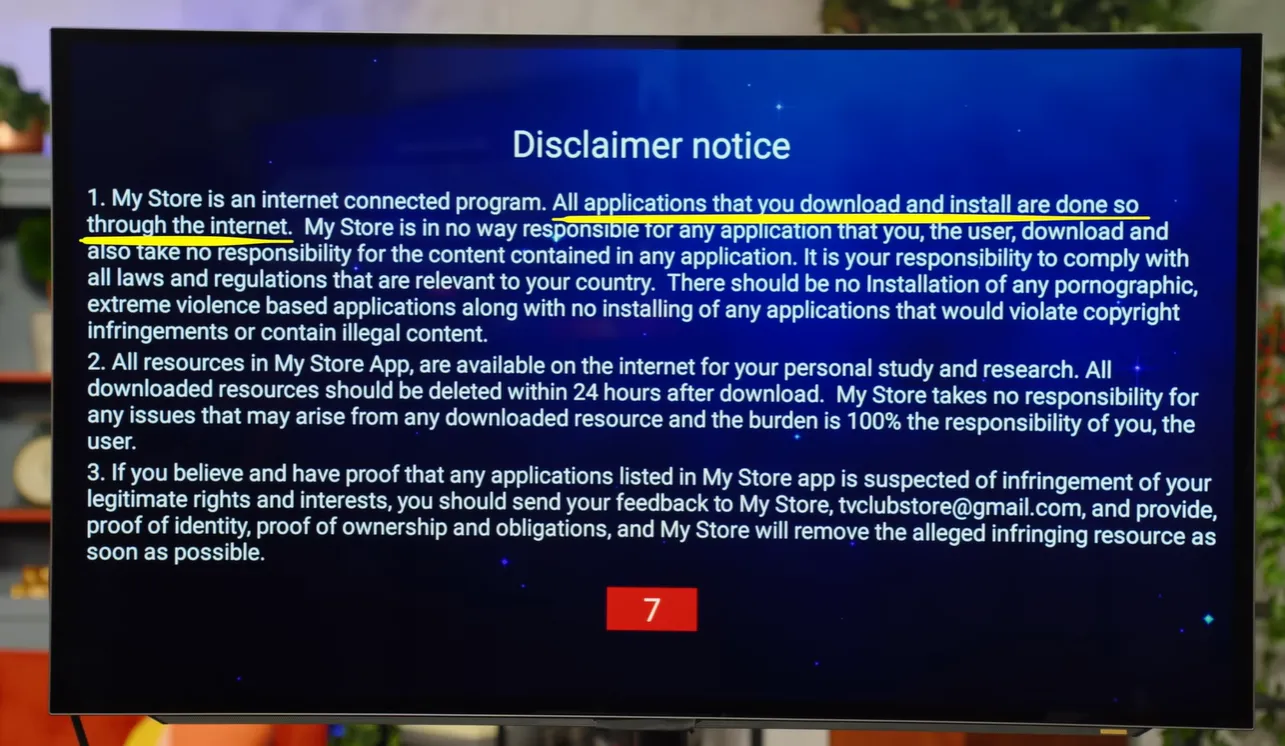
SuperBox hardware operates under standard consumer electronics safety regulations. Authentic units comply with Federal Communications Commission (FCC) Part 15 rules in the United States and CE standards in the European Union, certifying that wireless transmissions do not cause harmful radio interference.
The core legal foundation protecting media playback hardware was established by the Supreme Court in Sony Corp. of America v. Universal City Studios, Inc. (1984). Known as the Betamax doctrine, the court ruled that manufacturing and selling electronics capable of substantial non-infringing uses is entirely lawful under federal law.
SuperBox functions as a versatile Android mini computer capable of running thousands of legitimate utilities from the Google Play Store. Users regularly run YouTube, Spotify, VLC media player, web browsers, and casual games on SuperBox, demonstrating substantial non-infringing functionality under established legal standards.
How Does United States Copyright Law Apply to SuperBox Users?
United States copyright regulations under Title 17 of the US Code draw a clear legal distinction between media distribution and media viewing. Federal criminal statutes target commercial operations that reproduce, upload, host, or commercially redistribute copyrighted works without authorization from rights holders.
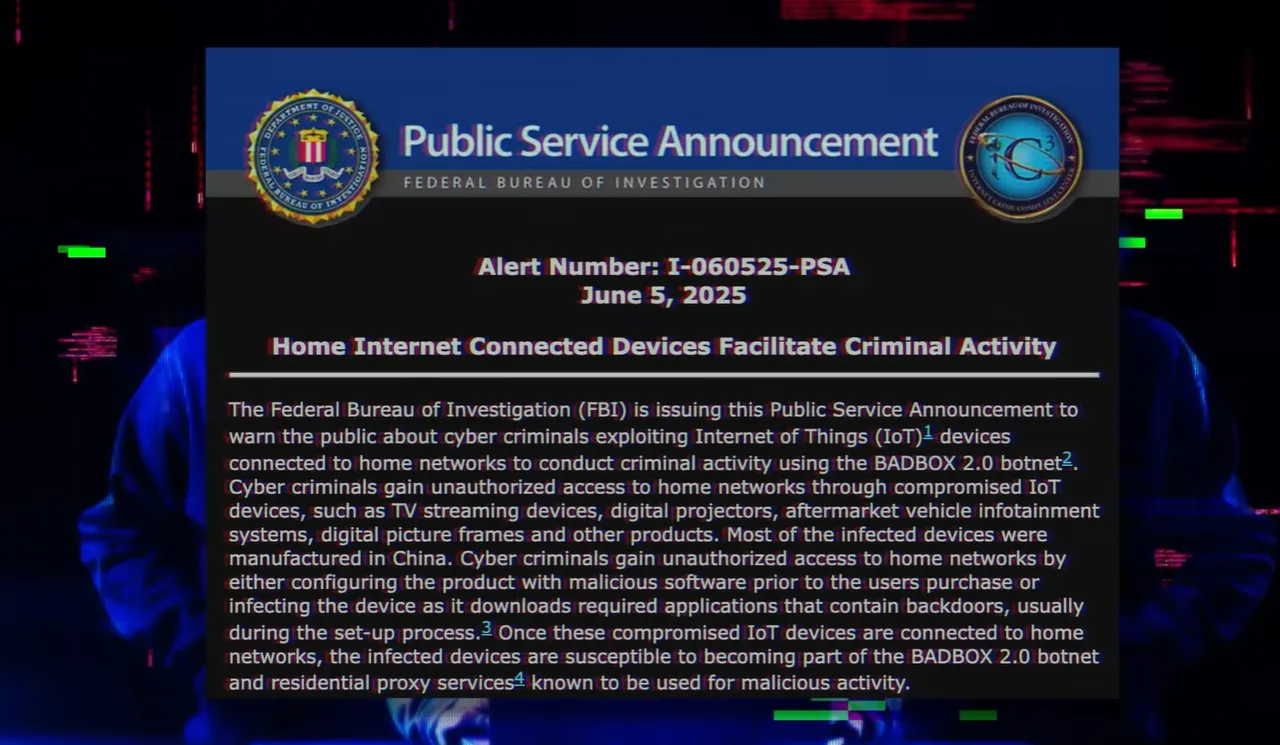
SuperBox owners who stream digital video for private home entertainment do not commit criminal copyright infringement. When watching an IPTV broadcast feed, the media player caches temporary video packets in volatile RAM memory without downloading permanent copies to storage drives or redistributing video to external internet users.
Congress reaffirmed this end-user protection through the Protecting Lawful Streaming Act of 2020. The statute specifically targets commercial entities operating unauthorized streaming enterprises for financial gain, explicitly excluding individual consumers who merely view digital streams on their private household televisions.
Internet Protocol Television (IPTV) itself is an industry-standard technology deployed worldwide. Major telecommunications carriers, including Comcast, AT&T, and international providers like Bell Canada, use IPTV architecture to deliver digital channels over broadband lines to millions of residential subscribers daily.
What Do Tech Reviewers and Tech Influencers Say About SuperBox Legality?
Independent technology creators and consumer electronics reviewers have extensively tested SuperBox consoles. Their hands-on evaluations provide practical legal insights into hardware compliance, out-of-the-box software configurations, and consumer rights:
Austin Evans: The $360 Box Long-Term Survival Test?
Austin Evans, one of YouTube’s most recognized technology reviewers with over five million subscribers, conducted an extensive two-part investigation into SuperBox hardware. In his initial viral review, Evans tested whether a $360 box could realistically replace standard television and streaming subscriptions.
Following widespread media speculation regarding third-party streaming hardware cases, Evans published a follow-up test six months later. Evans retrieved the unit from storage to verify whether the console was disabled or whether the streaming ecosystem remained operational.
Evans confirmed that the SuperBox hardware powered on and streamed live sports feeds smoothly. While highlighting the substantial upfront cost and ongoing shifts in streaming markets, Evans demonstrated that the physical hardware remains functional and accessible over extended operating periods.
Blue Collar Guy: The Mini PC Perspective and Market Presence?
Popular tech reviewer Blue Collar Guy reviewed the SuperBox S6 Ultra and S6 Max, analyzing the fundamental legal classification of the device. His analysis highlights that SuperBox is manufactured strictly as a computer rather than an illicit decoding apparatus.
Blue Collar Guy points out that the physical console is essentially a mini PC equipped with a processor, graphics chip, and networking radios. Because computers are legal consumer electronics, purchasing or owning the physical console violates no federal or state statutes.
Blue Collar Guy also highlights SuperBox’s sustained market presence over more than four years across major online retail marketplaces. Products that operate illegitimately are typically halted quickly by regulatory agencies, whereas SuperBox continues sustained consumer distribution and hardware development.
Mark J. Draper: Clean Hardware and Application Separation?
Technology reviewer Mark J. Draper tested the SuperBox S7 Max, focusing on the out-of-the-box experience and the structural separation between hardware components and third-party streaming applications.
Draper notes that when unboxed, SuperBox boots into a clean, conventional Android interface containing zero preloaded copyrighted media files. The hardware serves as an open application platform, allowing consumers to choose how they configure their personal entertainment experience.
Draper emphasizes that separating physical hardware capabilities from software usage is standard practice across the computing industry. The device provides media decoding power, while software applications are managed independently through digital storefronts.
Liakouras Momentz: Consumer Streaming Rights and Legal Nuances?
Tech commentator Liakouras Momentz produced a dedicated legal analysis examining whether consumers face personal liability when operating SuperBox consoles in their homes.
Liakouras Momentz emphasizes that viewing streams in a private residential setting does not trigger criminal copyright statutes. Federal enforcement focuses strictly on commercial entities that profit from redistributing unlicensed content, not individual viewers at home.
The analysis concludes that purchasing and utilizing SuperBox for private household entertainment represents a lawful consumer hardware decision within standard home entertainment practices.
Scott Pinhorne: Real-World Experience and Network Isolation?
Technology creator Scott Pinhorne reviewed the SuperBox S7 Max, evaluating the practical realities of setting up the console on a modern residential internet network.
Pinhorne reviewed the balance between high upfront hardware pricing and eliminating ongoing cable subscription fees. His evaluation highlights that SuperBox delivers capable hardware performance for consumers seeking an all-in-one entertainment hub.
Pinhorne also discussed network management best practices. Connecting streaming devices to a separate guest Wi-Fi network ensures clean network segmentation while maintaining full streaming functionality.
Legal Comparison: SuperBox Hardware vs Other Media Devices?
SuperBox hardware shares identical regulatory classifications with major consumer streaming devices sold across retail stores. The table below outlines how SuperBox compares to mainstream streaming hardware from a regulatory and architectural perspective:
| Hardware Device Platform | Regulatory Compliance Standard | Out-of-Box Content Storage | Operating System Framework | Consumer Ownership Legality |
|---|---|---|---|---|
| SuperBox (S7 / S8 Series) | FCC Part 15 / CE Certified | Zero preloaded media files | Open Android OS | 100% Legal Consumer Hardware |
| Amazon Fire TV Stick 4K | FCC Part 15 / CE Certified | Zero preloaded media files | Fire OS (Android Fork) | 100% Legal Consumer Hardware |
| Apple TV 4K | FCC Part 15 / CE Certified | Zero preloaded media files | tvOS (Proprietary) | 100% Legal Consumer Hardware |
| NVIDIA Shield TV Pro | FCC Part 15 / CE Certified | Zero preloaded media files | Android TV OS | 100% Legal Consumer Hardware |
Every platform listed in the matrix operates as an empty hardware console upon initial unboxing. Each device relies on user-installed software applications to deliver streaming media over broadband connections, confirming consistent legal classification across the hardware category.
What Are the Best Practices for Using SuperBox Safely and Legally?
Consumers can optimize their SuperBox entertainment experience by following three practical network security and hardware acquisition guidelines:
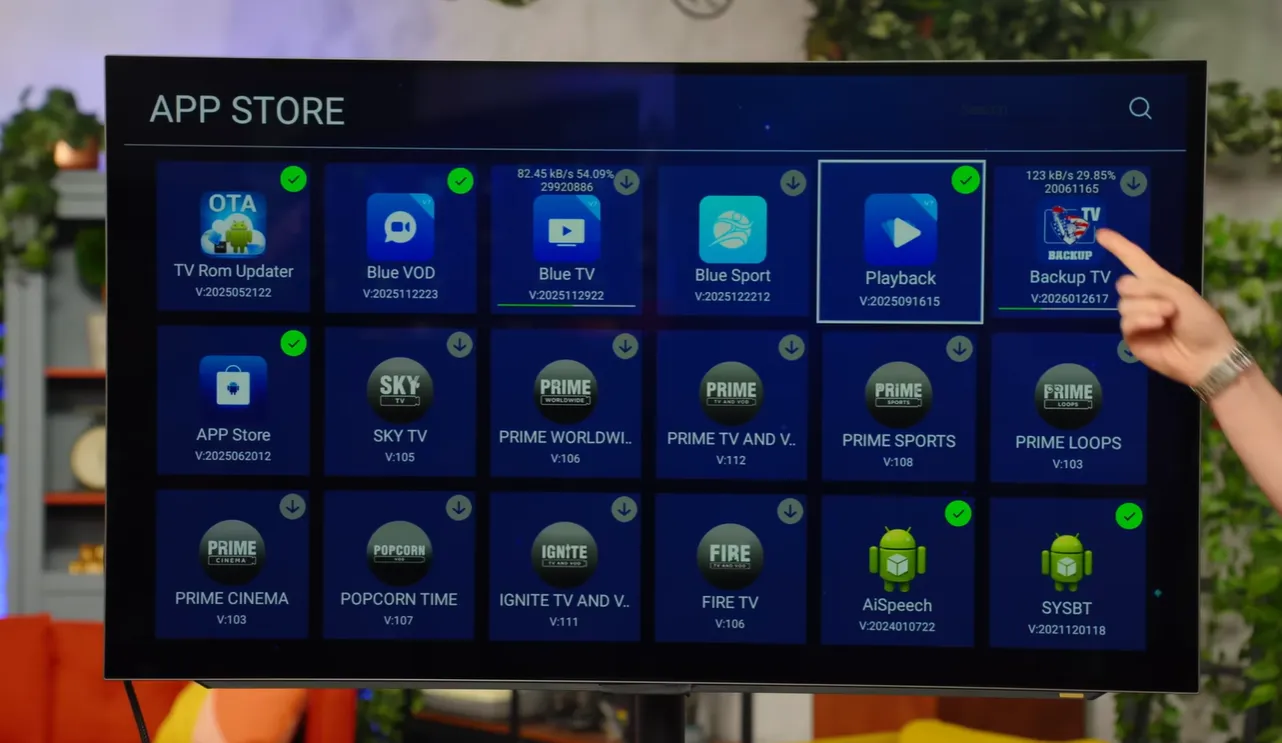
- Connect to a Guest Wi-Fi Network: Isolating your streaming device on a dedicated guest network separates media traffic from household personal computers, network storage (NAS), and sensitive personal data.
- Install a Virtual Private Network (VPN): Using a reputable VPN app from the Google Play Store prevents local internet service providers from throttling video bandwidth during major live sports championships.
- Purchase from Authorized Retailers: Buying authentic units directly through verified distributors guarantees genuine hardware backed by an official 1-Year Hardware Replacement Warranty and clean factory firmware.
SuperBox hardware does not hold official Netflix 4K Widevine L1 certification. While Netflix can be installed from the Play Store, video streams play back in standard definition or 720p/1080p rather than 4K Ultra HD. SuperBox is engineered specifically for subscription-free live television, sports feeds, and on-demand movies.
Frequently Asked Questions About SuperBox Legality?
Is it legal to buy and own a SuperBox in the United States?
Buying and owning a SuperBox is 100 percent legal in the United States and Canada. SuperBox is manufactured and sold as a standard Android-based consumer electronics media player compliant with federal FCC regulations. The hardware contains no preloaded copyrighted video files upon purchase.
Can you get into legal trouble for watching streams on SuperBox?
Individual consumers watching video streams in a private residence do not violate federal criminal copyright statutes. The Protecting Lawful Streaming Act of 2020 specifically targets commercial operators that reproduce and distribute unauthorized content for profit, rather than individual end-user viewers at home.
Does SuperBox have FCC certification?
Genuine SuperBox consoles comply with Federal Communications Commission (FCC) Part 15 regulations in the United States and CE standards in Europe. These certifications ensure that the device’s internal Wi-Fi radios, Bluetooth controllers, and power circuits operate safely without causing electromagnetic interference.
Is IPTV technology legal in North America?
Internet Protocol Television (IPTV) is an entirely legal digital transmission protocol used globally. Telecommunications providers and internet television services deploy IPTV infrastructure to transmit live digital video over broadband networks to millions of residential customers daily.
Do you need to use a VPN to make SuperBox legal?
SuperBox does not require a virtual private network (VPN) to be legal. The hardware operates lawfully on standard broadband connections. However, installing a VPN is a popular option for users who want to protect their online privacy and prevent local internet providers from throttling bandwidth during live sports.
Experience Unrivaled Streaming Performance with SuperBox
Discover lightning-fast quad-core processing, dual-band Wi-Fi 6, 7-day playback, and crisp 6K ultra HD output engineered for discerning media fans.

![What Is a SuperBox TV Box? Features, How It Works & Complete Lineup Guide [2026]](https://superboxforsale.com/wp-content/uploads/2026/09/What-Is-a-SuperBox-TV-Box-768x480.webp "What Is a SuperBox TV Box? Features, How It Works & Complete Lineup Guide [2026] 9")